

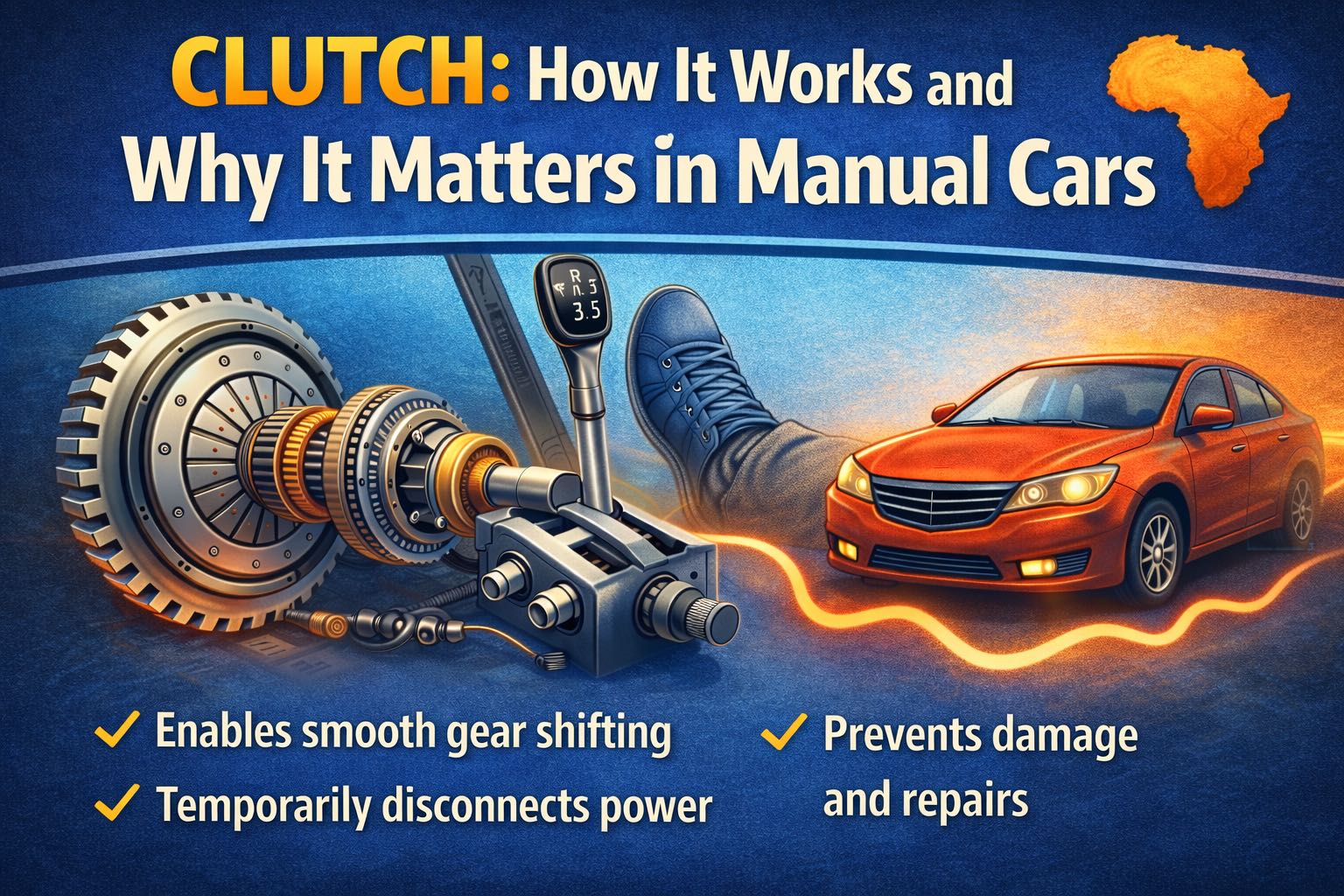
If you drive a manual car, the clutch is one of the most important components you use every day. It allows you to change gears smoothly without turning off the engine. Understanding how it works can help you drive better, reduce wear, and avoid costly repairs.
Why Manual Cars Need a Clutch
A running engine constantly produces power. But when changing gears, that power must be temporarily disconnected from the transmission. The clutch makes this possible by:
-
Disconnecting engine power briefly
-
Allowing smooth gear changes
-
Reconnecting power gradually
Without a clutch, smooth shifting in a manual transmission wouldn’t be possible.
How the Clutch Works
The clutch operates using friction to connect and disconnect engine power.
Main Components:
-
1. Flywheel – Connected to the engine
-
2. Clutch Disc – Transfers power to the transmission
-
3. ressure Plate – Presses the clutch disc against the flywheel
-
4. Diaphragm Spring – Controls engagement and release
-
5. Clutch Pedal & Hydraulic System – Activates the system
When You Release the Pedal
The clutch disc presses firmly against the flywheel, allowing engine power to flow to the transmission and move the car.
When You Press the Pedal
The pressure plate lifts away from the clutch disc, stopping power flow so you can shift gears smoothly.
Hill Starts and the “Bite Point”
When starting uphill, drivers release the clutch slowly to find the “bite point,” where engine force balances gravity and prevents the car from rolling backward. However, holding the clutch at this point for too long generates heat and increases wear.
What Causes Clutch Wear?
Common causes of premature clutch damage include:
-
1. Riding the clutch (resting your foot on the pedal)
-
2. Holding the car on hills using the clutch
-
3. Aggressive acceleration
-
3. Incomplete disengagement during shifting
Over time, worn friction material can cause slipping, poor acceleration, and difficulty shifting gears.
Key Takeaways
-
- The clutch allows smooth gear changes in manual cars
- 1. Understanding how your clutch works helps you drive more smoothly, reduce mechanical stress, and save money on maintenance.
-
2. It works through controlled friction between components
-
3. Proper driving habits extend clutch lifespan
-
4. Poor technique leads to expensive repairs
Drive smart. Shift smoothly. Protect your clutch. 🚗
0 Comments