
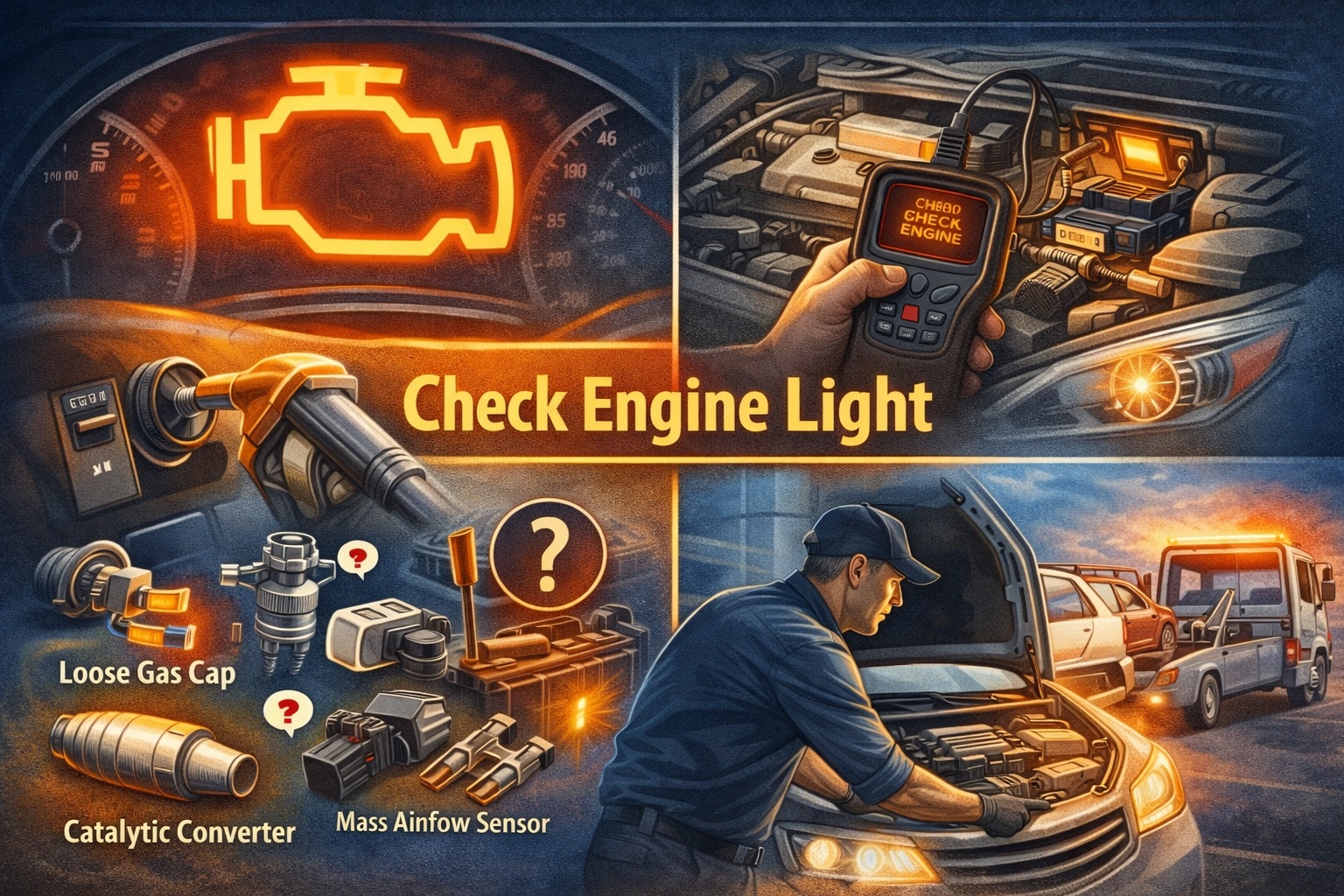
The check engine light can indicate anything from a loose gas cap to serious engine problems. This guide explains what to do when that dreaded light illuminates. When your check engine light comes on, don't panic, but don't ignore it either. If the light is steady (not flashing), you can typically continue driving but should have the vehicle checked soon. A flashing check engine light indicates a severe problem that could damage your catalytic converter - pull over when safe and have the vehicle towed to a service center.Modern vehicles store diagnostic trouble codes (DTCs) when the check engine light activates. These codes can be read with an OBD-II scanner, which many auto parts stores offer as a free service. Common causes include oxygen sensor failures, loose or damaged gas caps, catalytic converter issues, mass airflow sensor problems, or spark plug/ignition system failures.While code readers can identify the general area of concern, they don't always pinpoint the exact problem. Professional diagnostics are often necessary to determine the precise cause before replacing parts.
0 Comments